Residents of Taita Taveta are joining the Diaspora University Town (DUT) project as townhouse developers to become founders a level 5/6 University Medical Hospital. The hospital will have over 2,000 jobs and 30 medical services. Ronald Mwangombe of Ndara B Community talking about the hospital said, “One of the reasons Ndara B Community became a founder of the Diaspora University is to achieve the hospital.”
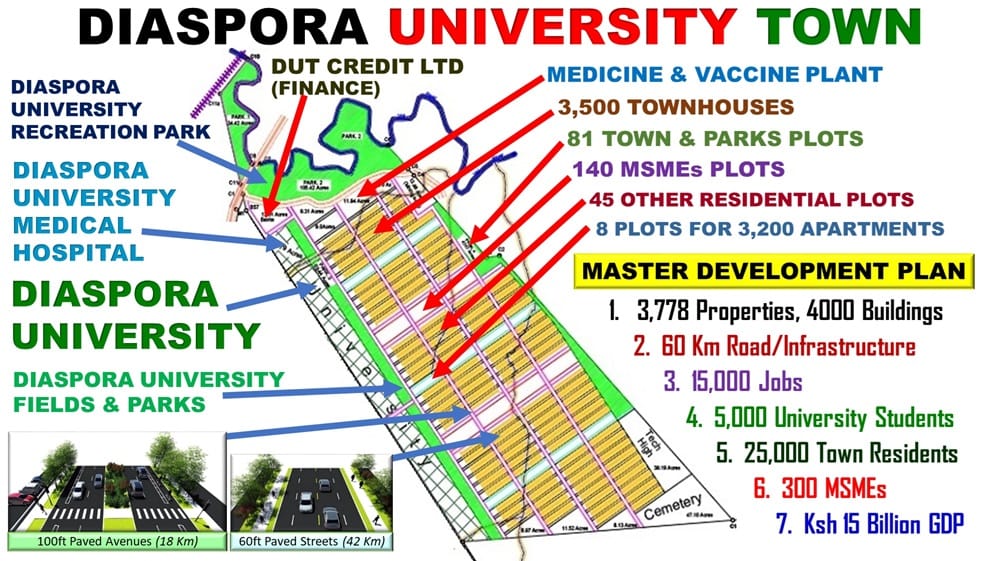
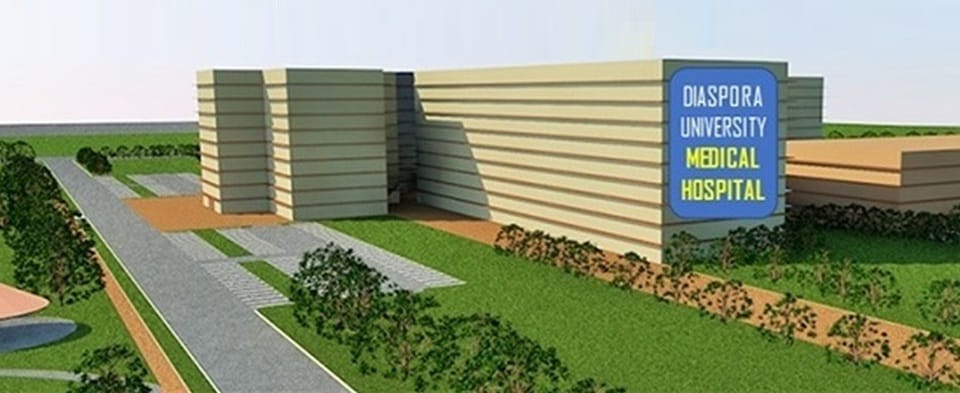
The hospital is one of the projects within the DUT plan. The hospital's revenue plan is embedded in the DUT's Ksh 15 billion Gross Domestic Product (GDP) and Kenya's GDP. The goal is to establish a non-profit level 5/6 hospital with about 50,000 square meters of medical space and a yearly budget of Ksh 4 billion as the town grows to 25,000 residents and the university to 5,000 students.
CHECKLIST FOR CATEGORIZATION OF HEALTH INSTITUTIONS BY THE MEDICAL PRACTITIONERS AND DENTISTS BOARD, NATIONAL HOSPITAL INSURANCE FUND AND THE COUNCIL OF GOVERNORS
LEVEL 5 MANDATORY REQUIREMENTS
- Separate Outpatient Department from Accident and Emergency Department
- Functional Departments of Medicine, Paediatrics, Surgery, Obstetrics, Gynaecology and Community health
- 12 functional Intensive Care Unit beds
- 12 functional High Dependency Units beds
- At least 7 functional Theatres (Maternity, General, Orthopaedic, Paediatric, ENT, Dental and Ophthalmology)
- Radiology Services (CT scan , EEG, MRI, Mammography)
- Specialist services (Radiotherapy, Chemotherapy, Specialised Surgeries, Dialysis, Clinical pharmacy)
- Differentiated Pharmacy Services to include: (Main, Outpatient and Ward-level Pharmacy)
- Central Sterile Services Department (CSSD) Department
- Burns unit
LEVEL 5 MEDICAL SERVICES
- Outpatient turnover of more than (250) two hundred and fifty per day.
- Disaster Response and Management.
- Management of Surgical Emergencies including Trauma Care.
- Management of High-Risk Pregnancy and Obstetric Complications.
- Maternal & Child Health services/Family Physician
- Maternity Services.
- Radiology Services (CT scan , EEG, MRI, Mammography)
- Emergency Services to include Advanced Cardiac Life Support (ACLS), Advanced Trauma Life Support (ATLS) and Paediatric Emergency.
- Emergency Operations.
- General Surgical Operations.
- Specialised Surgical Services to include comprehensive burns management
- Management of Medical, Surgical, Paediatric and Gynaecological in-patients;
- Laboratory Services of class E
- Specialised Therapy Services to include Radiotherapy, Chemotherapy and Renal Dialysis;
- Specialised Clinics e.g. Medical Outpatient clinic (MOPC), General Out-patient Clinic Services (GOPC), Surgical Outpatient Clinic (SOPC), Paediatric Outpatient Clinic (POPC), skin, psychiatric, Tuberculosis (TB), Comprehensive Care Clinic (CCC), Diabetes Outpatient Clinic (DOPC) etc.
- Palliative Care;
- Mental Health & Rehabilitative Services;
- Physiotherapy
- Occupational Therapy
- Speech and Hearing Therapy.
- Orthopedic Technology Services
- Ear Nose and Throat (ENT) Services
- Ophthalmology Services
- Dental Services
- Nutrition Services
- Differentiated Pharmacy Services to include: (Main, Outpatient and Ward-level Pharmacy)
- Sterile Production Unit Services e.g. IV fluid
- Internship Training
- Forensic Pathology Services
LEVEL 6B MANDATORY REQUIREMENTS
- Radiotherapy Isotope Scanning and Chemotherapy
- Radiotherapy
- Organ Transplant, Bypass, Reconstructive Surgery
- Assisted Reproduction Invitro Fertilization (IVF)
- Training Medical Specialists and Sub Specialists and offering apprenticeship
- ICU Capacity of 24 beds
- Neonatal ICU Capacity of 5 beds
- Paediatric ICU Capacity of 5 beds
- HDU Capacity of 24 beds
- Ten (10) Operating Theatres
- Oncology Wards for Paediatrics and Adults
- Adequate Lecture Theatres and Skill Labs
- Attached to a recognized Medical School
- Offers both Multi-Specialty and Sub-Specialty Services
LEVEL 6 FACILITY INFRASTRUCTURE
- Sits on at least twenty (20) acres of land; (10,000 sq. meters)
- At least one thousand five hundred (1500) beds (indicate number of beds)
- Accidents and Emergency Department. (a. One (1) plaster room & b. Four (4) operating theatres in A&E)
- Out Patient Department (separate from A&E) (a. Specialist clinics per specialty, b. Ten (10) triage room, c. Twenty (20) consultation rooms, d. Ten (10) registration tellers, e. One (1) nursing station, f. Two (2) injection rooms, g. One (1) plaster room, h. One (1) minor theatre per specialized surgical department, i. Dental department, j. One (1) billing point per every service delivery points, k. ENT services department, l. One (1) laboratory room for OPD, m. One (1) patient referral area, n. Records office, o. Sluice room, p. Radiology room, q. Cloakrooms, r. Orthopaedic technology, s. Telemedicine department, t. Library and Resource center)
- Intensive Care Unit with at least 24 ICU beds;
- High Dependency Unit with at least 24 beds
- Radiology Department with - (a. x-ray machine; b. MRI Machine; c. CT scan machine; d. Intra oral Dental X-ray unit; e. Dental X-ray OPG; f. Mammography machine; g. Ultra sound machine; h. PET Scan; i. Two (2) Radiotherapy bunker; j. Isotope therapy isolation rooms; k. Brachytherapy suite; l. Dosimetry room; m. Cyber Knife)
- MCH/FP Department with─ (a. One waiting room; b. One immunization services room; c. One FP coordination room; d. One antenatal coordination room)
- Maternity Department ward for six delivery coaches; (a. Antenatal department; b. Postnatal department; c. Delivery room with six delivery coaches; d. New Born Unit with incubators & with six HDU cots)
- Renal Department with 20 beds. (Water purification plant)
- Inpatient Services; (a. adult & paeditric oncology wards)
- Ten (10) Operating Theatres being one each for─ (a. General; b. Maternity; c. Orthopedic; d. Paediatric; e. Ent; f. Ophthalmology; g. Dental; h. Neurosurgery; i. Cardiothoracic; j. plastic surgery;
- Medical Engineering Department;
- Inpatient Pharmacy
- Outpatient Pharmacy
- Administration Department with─ (a. One cash office; b. Two stores; c. Two administration offices; d. One room for health records)
- Adequate Lecture Theatres and Skill Labs
- A General Supply Stores
- Kitchen;
- Laundry;
- One (1) Community Services Room;
- One (1) Mortuary;
- Staff Quarters for at least eight persons on duty;
- Ten (10) Cloakrooms;
- Clean Water Supply and Reservoir
- One (1) Placenta Pit/Macerators;
- One (1) Generator House;
- One (1) Incinerator;
- Four (4) ATLS Ambulance;
- Four (4) ACLS Ambulance;
- Eight (8) Support & Utility Vehicles;
- A Composite Pit/Noncombustible waste holding area;
- Non-combustible Waste Management System;
- Fence and Gate;
- Ramp /Disability Friendly Walkways;
- Medical Waste Management System (a. Waste segregation, b. IPC committee with minutes, c. Policy/SOP’s on waste management)
- Adequate Ventilation, Lighting and Spacing
- CSSD Department (Mandatory)
- CCTV Control Room
LEVEL 5 PERSONNEL (1,731 JOBS)
- Fifty (50) medical Officers;
- Seven (7) Anesthesiologists;
- Two (2) cardiologists;
- Four (4) general surgeons;
- Two (2) orthopedic surgeons;
- One (1) cardiothoracic surgeon;
- One (1) critical care physician;
- Two (2) ENT surgeons;
- Two (2) Gastroentrologist
- Three (3) Obs/Gyne specialists;
- Two (2) palliative care specialists;
- Two (2) neonatologists;
- Two (2) nephrologists;
- One (1) neurologist;
- One (1) plastic surgeon or reconstructive surgeon;
- One (1) neuro-surgeon;
- Four (4) oncologists;
- Two (2) ophthalmologists;
- One (1) optometrist;
- One (1) dermatologists;
- One (1) paediatric endocrinologist;
- One (1) paediatric nephrologist;
- One (1) paediatric neurologist;
- One (1) paediatric surgeon;
- Four (4) paeditricians;
- Two (2) pathologists;
- Four (4) psychiatrists;
- Four (4) radiologists;
- One (1) rheumatologist;
- Four (4) specialist physicians or Internist;
- One (1) medical endocrinologist;
- Two (2) public health specialist;
- One (1) urological surgeon;
- One (1) child and adolescent psychiatrist;
- One (1) forensic psychiatrist;
- Forty four(44) general clinical officers;
- Seven (7) graduate clinical officers;
- Specialist clinical officers to include-
- Two (2) clinical officer lung & skins
- Four (4) clinical officer ENT/audiology
- Two (2) clinical officers ophthalmology or cataract surgery;
- Six (6) clinical officers paediatrics;
- Two (2) clinical officers reproductive health;
- Two (2) clinical officers dermatology or venereology;
- Two (2) clinical officers Orthopaedics;
- Fifteen(15) clinical officers anaesthetists;
- Two (2) clinical officers co psychiatry/mental health;
- Two (2) clinical officers oncology or palliative care;
- One hundred (100) BSN nurses;
- Two (2) cardiology nurses;
- Forty eight (48) critical care nursing nurses;
- Two hundred and fifty (250) Kenya Enrolled Community Health nurses;
- Three hundred and eight (308)Kenya Registered Community Health nurses;
- Ten (10) Kenya Registered Nurses
- Thirty (30) Kenya Registered Nurse/Mental Health & psychiatry
- Ten (10) Enrolled Nurses
- Thirty (30)Nephrology nurses;
- Twenty (20) Oncology nurses;
- Twenty (20) Ophthalmic nurses;
- Twenty (20) paediatric nurses;
- Twenty (20) palliative care nurses;
- Twenty (20) Kenya Registered Psychiatric nurses (KRPN)
- Fifty (50) Registered Midwives;
- Two (2) Sign Language staff;
- Sixty (60) theatre nurses;
- Twenty (20) anaesthetist nurses;
- Twenty (20) Accidents & Emergency nurses;
- Twenty (20) Neonatal ICU nurses
- Twenty (20) paediatric ICU nurses
- Ten (10) forensic nurses
- Six (6) pharmacists;
- Four (4) clinical pharmacists;
- One (1) oncology pharmacist;
- Ten (10) pharmaceutical technologist;
- Six (6) plaster technicians or technologists;
- Six (6) orthopedic technologists;
- Twelve (12) General physiotherapists;
- Two (2) BSC physiotherapy;
- Three (3) specialized physiotherapists;
- Twelve (12) Occupational therapists;
- Two (2) clinical psychologists;
- Ten (10) dental officers;
- Two (2) oral maxillofacial surgeons;
- Six (6) paediatric dentists;
- Two (2) Periodontics
- Two (2) Prostodontist
- Two (2) Orthodontists;
- Ten (10) dental technologists;
- Ten (10) general radiographer;
- Two (2) ultrasonographers;
- One (1) mammographer;
- Three (3) CT scan or MRI radiographer;
- Two (2) dental radiographer;
- Two (2) therapy radiographer;
- Two (2) nuclear medicine technologists;
- One(1) radiation monitoring and safety officer (health physicist or medical physicist);
- Six (6) Health promotion officers
- Eight (8) Medical social workers;
- One (1) Medical Superintendent/CEO;
- Two (2) health administrative officers;
- Two (2) human resource management officers;
- Twenty(20) clerks;
- Two (2) secretaries
- Six (6) accountants;
- Six (6) supply chain assistants;
- Two (2) supply chain officers;
- Twelve (12) health records information management officers;
- Four (4) ICT officers;
- Two (2) medical engineers
- Eight (8) Medical engineering technologists;
- Six (6) medical engineering technicians;
- Twenty (20) nutrition and dietetic officer;
- Twelve (12) nutrition and dietetic technologists;
- Four(4) nutrition and dietetic technicians;
- Two (2) cateress;
- Four (4) Public health officers;
- Twenty (20) cooks;
- Fifty (50) medical laboratory technologists/Officers
- Fifteen (15) Drivers;
- Sixty(60) support staff;
- Ten (10) Mortuary attendants
- Sixteen (16) Security officers.
LEVEL 6 PERSONNEL (3,463 JOBS)
- One hundred (100) Medical Officers;
- Thirty (30) Anaesthesiologists;
- Ten (10) Cardiologists;
- Ten (10) General Surgeons;
- Four (4) Trauma Surgeons
- Ten (10) Orthopedic Surgeons;
- Ten (10) Cardiothoracic surgeon;
- Four (4) Emergency Physicians;
- Ten (10) ENT Surgeons;
- Ten (10) Gastroenterologist
- Twenty (20) Obs/Gynespecialists;
- Ten (10) Palliative Care Specialists;
- Ten (10) Neonatologists;
- Ten (10) Nephrologists;
- Ten (10) Neurologist;
- Ten (10) Plastic Surgeon or Reconstructive Surgeon;
- Ten ( 10) Neuro-surgeon;
- Twenty (20) Oncologists;
- Twenty (20) Ophthalmologists;
- Ten (10) Dermatologists;
- Four (4) Paediatric Endocrinologist;
- Four (4) Paediatric Nephrologist;
- Four (4) Paediatric Neurologist;
- Ten (10) Paediatric Surgeon;
- Twenty (20) Pediatricians;
- Twenty (20) Pathologists;
- Twenty (20) Psychiatrists;
- Twenty (20) Radiologists;
- Four (4) Rheumatologist;
- Twenty (20) Specialist Physicians or Internist;
- Four (4) Medical Endocrinologist;
- Ten (10) Public Health Specialists;
- Ten (10) Urological Surgeon;
- Fifteen (15) Clinical Officers Anaesthetists;
- One hundred & fifty (150) BSN Nurses;
- Forty (40) Cardiology Nurses;
- Two hundred (200) Critical Care Nursing Nurses;
- Twenty (20) Forensic Nurses;
- Five hundred (500)Kenya Registered Community Health nurses;
- One hundred & twenty (128) Kenya Registered Nurse/Mental Health & Psychiatry
- One hundred & twenty (140) Kenya Registered Nurses
- Sixty (60) Cardiology Nurses
- One hundred (100)Nephrology Nurses;
- Forty (40) Oncology Nurses;
- Forty (40) Ophthalmic Nurses;
- One hundred & twenty (120) Paediatric Nurses;
- One hundred (100) Neonatal Critical Care Nurses
- Fifty (50) Pediatric ICU Nurses
- Forty (40) Palliative Care Nurses;
- Twenty (20) Forensic Nurses
- Sixty (60) Psychiatric Nurses;
- Eighty (80) Kenya Registered Nurse/Midwives
- Forty (40) Registered Midwives;
- Two (2) Sign Language Staff;
- One hundred & forty (140) Theatre Nurses;
- Forty (40) Anesthetist Nurses;
- Seventy(70) Accidents & Emergency Nurses;
- Twenty (20) Pharmacy Specialists
- Twenty (20) Pharmacists;
- Sixty (60) Pharmaceutical Technologist;
- Twelve (12) Plaster Technologists;
- Twelve (12) Orthopedic Technologists;
- Thirty six (36) General Physiotherapists;
- Six (6) BSC Physiotherapy;
- Fifteen (15) Specialized Physiotherapists;
- Twenty five (25) Occupational Therapists;
- Ten (10) Clinical Psychologists;
- Ten (10) Oral Maxillofacial Surgeons;
- Six (6) Paediatric Dentists;
- Six (6) Orthodontists;
- Six (6) Prosthodontist
- Six (6) Periodontist
- Ten (10) Dental Technologists;
- Twenty five (25) General Radiographer;
- Three (3) Mammographer;
- Three (3) CT scan or MRI Radiographer;
- Two (2) Dental Radiographer;
- Four (4) Radiation Therapists
- Four (4) Nuclear Medicine Technologists;
- Two (2) Radiation Monitoring and Safety Officer (health physicist or medical physicist);
- Eight (8) Medical Social Workers;
- One (1) Chief Executive Officer (CEO)
- Two (2) Health Administrative Officers;
- Four (4) Human Resource Management Officers;
- Fifty (50) Clerks;
- Ten (10) Secretaries
- Six (6) Accountants;
- Six (6) Supply Chain Assistants;
- Five (5) Supply Chain Officers;
- One hundred (100) Health Records Information Management Officers;
- Ten (10) ICT Officers;
- Five (5) Biomedical Engineers
- Twenty (20) Biomedical Engineering Technologists;
- Twenty (20) Nutrition and Dietetic Officers;
- Twenty (20) Nutrition and Dietetic Technologists;
- Five (5) Cateress;
- Four (4) Public Health Officers;
- Twenty (20) Cooks;
- Fifty (50) Scientific Medical Laboratory Specialists
- Fifteen (15) Drivers;
- One (100) Support staff;
- Ten (10) Mortuary Attendants
- Sixteen (16) Security Officers.
STEP BY STEP PROCESS OF DEVELOPING A DUT TOWNHOUSE
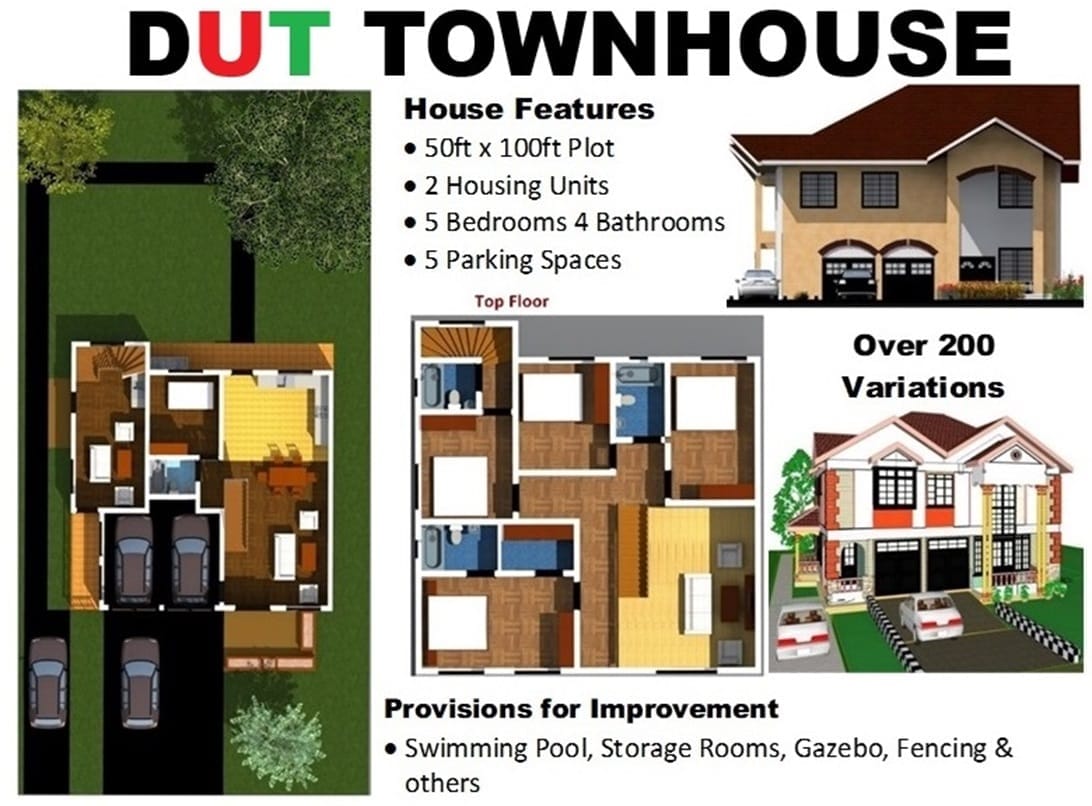
STEP 1. KSH 750,000
Visit a bank and borrow Ksh 750,000 through the bank's Personal Unsecured Loan products. Some of the Bank products that will make the loan repayment below Ksh 15,000 a month are:
KCB Bank Personal Unsecured Check-Off Loan
https://ke.kcbgroup.com/for-you/get-a-loan/unsecured-loan/check-off
Get a check-off loan as a government employee, or a company that has an agreement with KCB Bank. The check-off loan of Kes 20,000 up to Kes 10 Million is repayable in up to 120 months (10 years), with monthly repayments remitted by your employer.
Coop Bank Personal Unsecured Check-off Loan
https://www.co-opbank.co.ke/borrow/personal-loan/
Minimum loan amount of Ksh 50,000. Maximum loan amount: KES 10,000,000. Maximum term of up to 132 months (11 years)
DTB Bank Personal Unsecured Loan
https://dtbk.dtbafrica.com/account/unsecured-loan
Check off Non-Check loan, unsecured loan. Minimum Kes 50,000 up to Kes 6 Million. Tenor 96 months (8 years).
ABSA Bank Personal Unsecured Loan
https://www.absabank.co.ke/personal/get-a-personal-loan/#personalloancalculator
Borrow up to KES6,000,000 with no collateral required as security. Flexible repayment options up to 96 months
HTCB Bank Personal Loan
Maximum repayment period of 84 months. Maximum loan amount of Kes 7 million
https://hfcb.co.ke/borrow/for-individuals/personal-loan
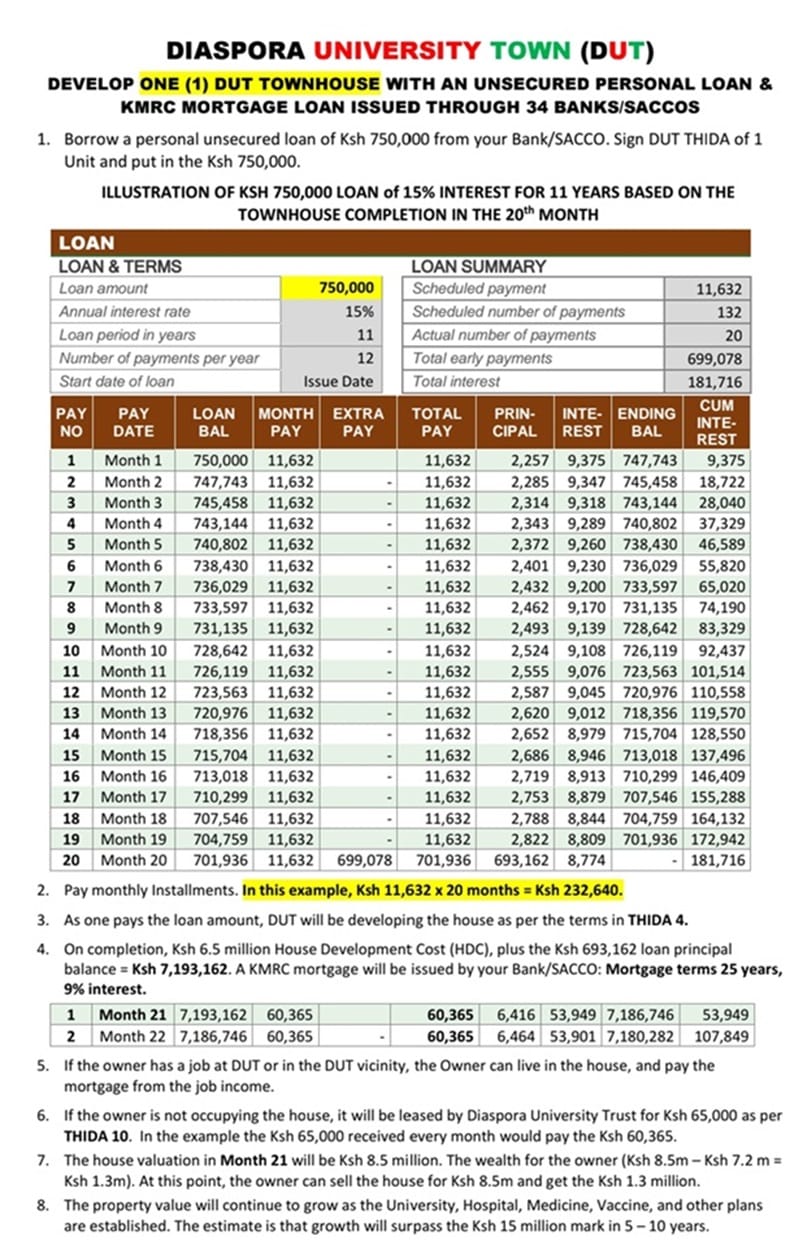
Monthly Payments of Loans based on 15% Interest
ILLUSTRATION
Note that the bank's interest rate and loan period will determine the actual amount.
STEP 2. DUT-THIDA
Sign a DUT Townhouse Investment and Development Agreement (THIDA) and put the Ksh 750,000 in the Diaspora University Trust account.
At this point, a DUT townhouse developer file will be open and will start developing one townhouse.
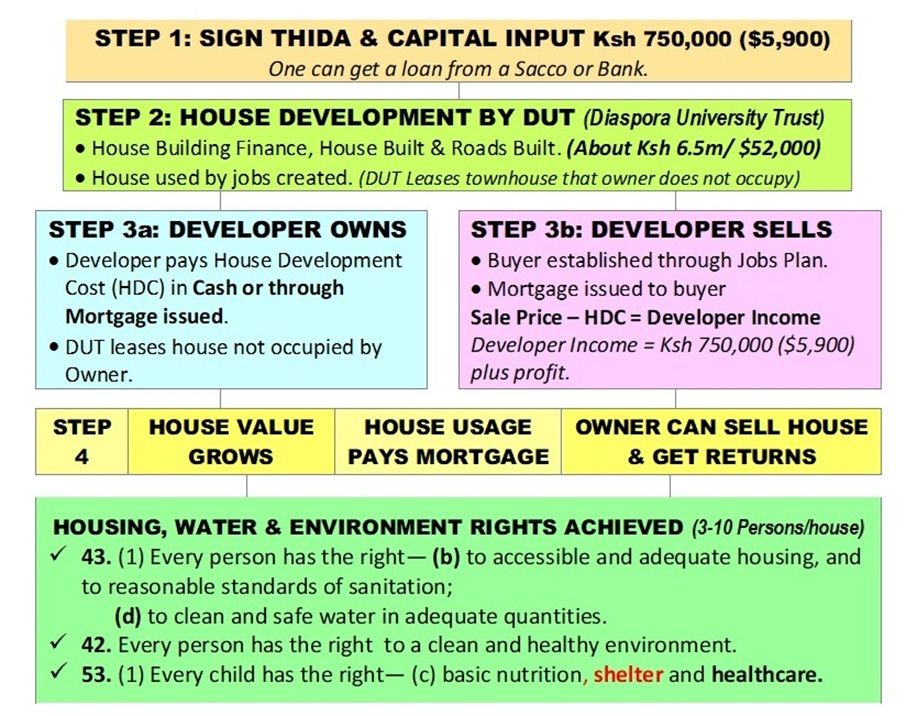
STEP 3. PAY INSTALLMENTS AS THE DUT DEVELOPS THE TOWNHOUSE
Pay the monthly installments to your bank.
DUT, on the other hand, will develop the townhouse in accordance with THIDA Article 4.
In about 12–48 months, the DUT Design-Build plan will complete the townhouse.
STEP 4. COMPLETED HOUSE MORTGAGE
Upon completion of the house, get a KMRC mortgage through your bank.
The mortgage at this point can include the Principal Balance of the unsecured loan (Step 1), and the House Development Cost (THIDA Article 4).
The table in step 1 illustrates how the principal balance is incorporated into a mortgage.

STEP 5. COMPLETED HOUSE USAGE
The owner can occupy their house and live in a well-planned town with a clean and healthy environment, a University, a level 5/6 university hospital, good basic education schools for children, and other amenities.
If the owner does not live in the house, the owner can lease the house to DUT in accordance with THIDA Article 12 and receive Ksh 65,000 a month.
STEP 6. COMPLETED HOUSE EQUITY
Upon completion, each house will have equity calculated as Sale Price less the mortgage value. The sale prices are recorded in the DUT THD page https://dut.or.ke/thd
- Year 1 Sale Price. Ksh 8 million
- Year 2 Sale Price Ksh 8.5 million
- Year 3 Sale Price Ksh 9 million
- Year 4 Sale Price Ksh 9.5 million
- Year 5 onward Market Price.
GDP GROWTH APPROACH
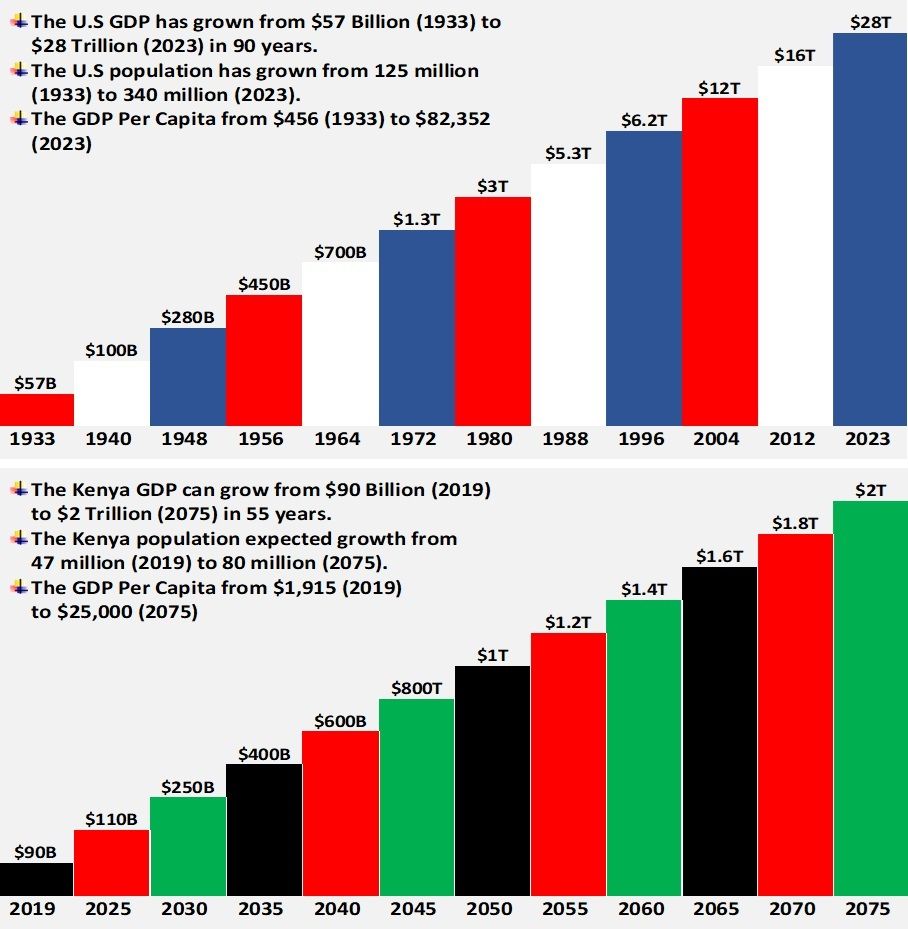
DUT uses the GDP Growth approach, which has grown the U.S. economy from $57 billion to the current $30 trillion. DUT will achieve a GDP of Ksh 20 billion.